Showing posts with label composting. Show all posts

Friday, July 29, 2016

Vermiculture In The Workplace

Before the term vermiculture was coined, before we had written language, and before we started drinking coffee, worms were hard at work breaking down organic materials and returning nutrients to the soil. We love building soil, and we love good coffee.  So when we met Chris Shepherd of Cafe Altura at a worm composting workshop, we were happy to continue the connection by bringing a worm bin to his workplace.  Chris and his team are enthusiastic about keeping a worm farm going on-site, and we are stoked to help them out. 

Ventura Cooperative's soil restoration efforts rely on vermiculture to build soil diversity and nutrient rich materials to feed plants in the gardens we take care of. Sometimes it can be frustrating to keep a worm colony alive and well, so we provide consultation visits with each worm farm we deliver, to make sure everyone benefits in the transition, including the worms. 
  

Setting up a worm bin is easy, it's the maintenance that takes a bit more finesse.  What you need is a box, moist newspaper strips, some compost and worms to start.  We provide all these items and a worm colony already established in the farm.  We knew Chris would have ample coffee grinds, which is a great addition to the scraps and other items worms like.  We set up the worm farm right next to the Cafe Altura staff kitchen area, to make it easy and accessible for everyone to use.

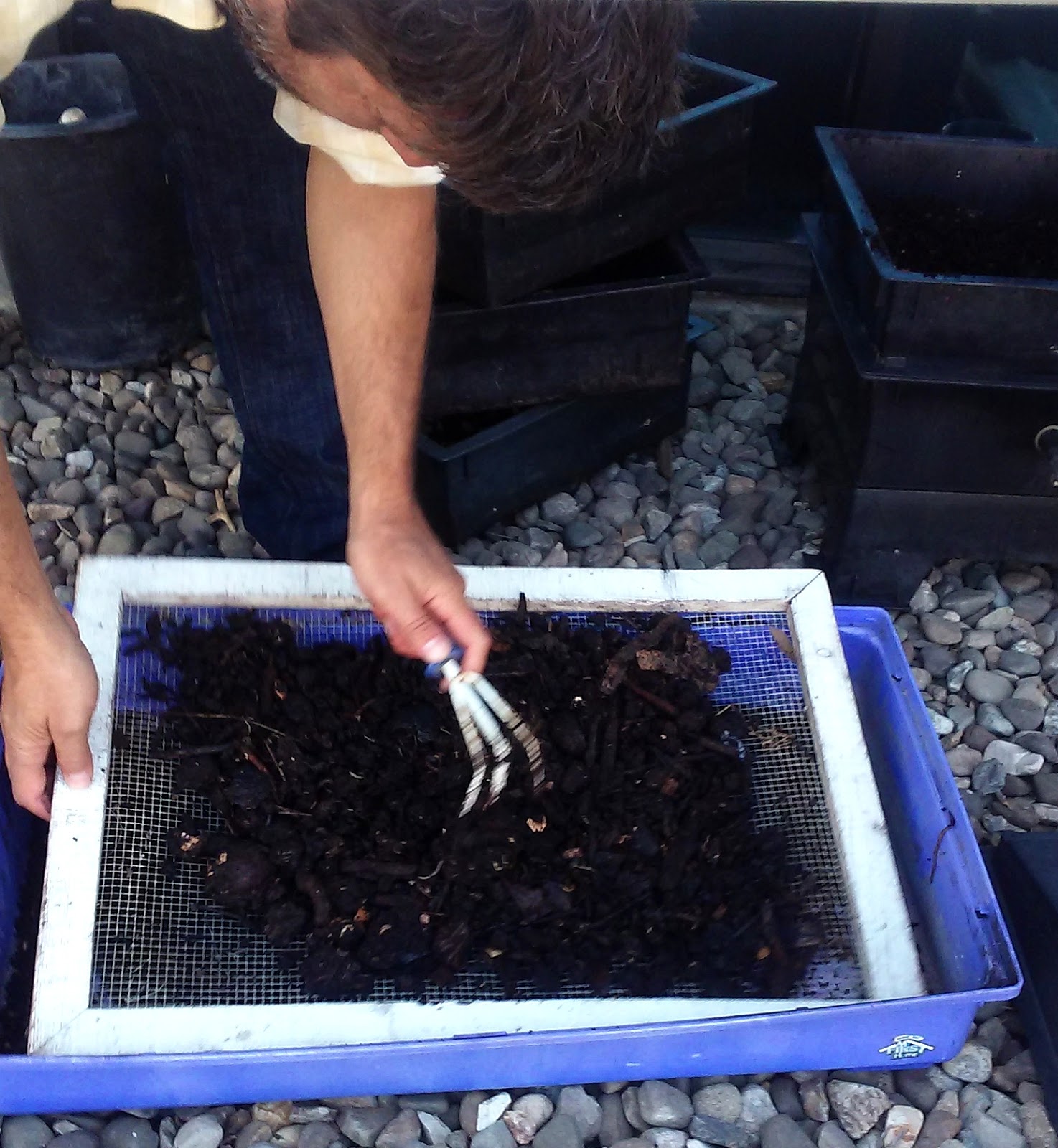
After about a month, we came back to Cafe Altura to check on the farm and answer any questions. We took the farm outside and harvested the castings together.  It was in perfect condition.

By having a hands on visit, we were able to share valuable information with Chris' team.  We considered what worms need to live. Moisture, air, food, darkness, and warm (but not hot) temperatures. Bedding, made of newspaper strips or leaves, will hold moisture and contain air spaces essential to a thriving worm habitat.  Everyone was able to see this knowledge at work in the vermiculture environment which helped a lot.  And they were able to take super rich castings back home to their gardens.

We're excited!  Chris and his team at Cafe Altura are located by the Surf Brewery and a few other businesses that are interested in starting their own vermiculture habitats.  They are early adopters and eager to create a more sustainable culture in this area.  Let's help them out! We traded some of our service costs for their organic coffee.  Come on over and have a cup, it's really good!


Special thanks to Madison Choate and the Resource Conservation Partners for connecting us all!

Relevant Links:
Cafe Altura
Resource Conservation Partners

Monday, November 23, 2015

Food Security and Water Wise Gardening


The healthiest most sustainable way to gain food security is to augment your food supply with a garden in your yard.  Not only do you and your family gain access to fresh veggies, which are at their best in flavor and nutrition picked immediately before eating, but home gardens help ease our impact on the environment.  Healthy soil retains more water, home grown veggies require less water to process, and a yard garden lowers your carbon footprint.

In our garden we have a steady supply of lima beans, kale, carrots, onions, beets, chard, salad greens and herbs.  There is always some seasonal harvest to add depending on the time of the year. Nothing leaves our yard.  We have three living compost piles, and two worm bins crawling with red wrigglers.  We brew compost tea to sell and use in our gardens.    

We also mulch like crazy and we munch like crazy.  We walk barefoot on the spongy soil and graze like rabbits.  And what we don't eat right away we can or share with our friends and neighbors. 

Mason jars are reusable and fermented veggies are really good for you. "Fermented foods that have been through a process of lactofermentation in which natural bacteria feed on the sugar and starch in the food creating lactic acid. This process preserves the food, and creates beneficial enzymes, b-vitamins, Omega-3 fatty acids, and various strains of probiotics."  -Wellness Mama

Become food secure.  It is a shift in consciousness that empowers you and your family with experience and knowledge.  Being able to feed yourself with food you grew yourself is liberating!

Roughly 49 million people live in food insecure situations in the United States.  Roughly 40% of the food produced and brought to market is wasted. A typical meal of industrial produced food requires 200-700 gallons of water to produce.  By turning that wasteful chemically fed lawn into a organic food forest you help yourself, your neighborhood and the environment all at the same time.

A great book to read regarding  food security and growing your own is Food Not Lawns.  Another go to book is A Vegetable Gardener's Guide to Permaculture.  Start there and at the same time visit your local farmer's market, volunteer for Food Forward Gleaning projects, and connect with local community garden projects.


Tuesday, February 11, 2014

Chipping Away at Permaculture

As our next step in creating a permaculture landscape in Ally's yard, we asked our friend Don to come over with his chipper to help with breaking down a huge pile of brush. Instead of having all the brush hauled off to the landfill, we decided to keep it onsite and use the resource for mulch and compost building.  It's part of our permaculture ethic, to close the loop and reuse as much as possible.

Don purchased the chipper with this is mind.  Whenever we have a need to chip up a bunch of organic debris, he is the person we call.  He's been helping neighbor's and friends since he started in his own backyard last summer.  It's a great piece of equipment for small to mid-size jobs.  Easily portable and economical, and makes really nice mulch.

Earlier in the week, our crew had cut down a volunteer pine tree and trimmed vines and hedges all around Ally's yard.  The trunk and some of the branches were too big to chip, so we cut them into lengths to be used as firewood.   Most of the rest of the branches we cleaned for mulching. The rest we lopped up into big compost piles.  After about 6 hours of work we had about 5 yards of rough compost and a dozen bags of fine mulch to be used in the yard.

Thanks Don!  Now we can move on to the next phase of Ally's edible landscape--building raised beds and compost bins.